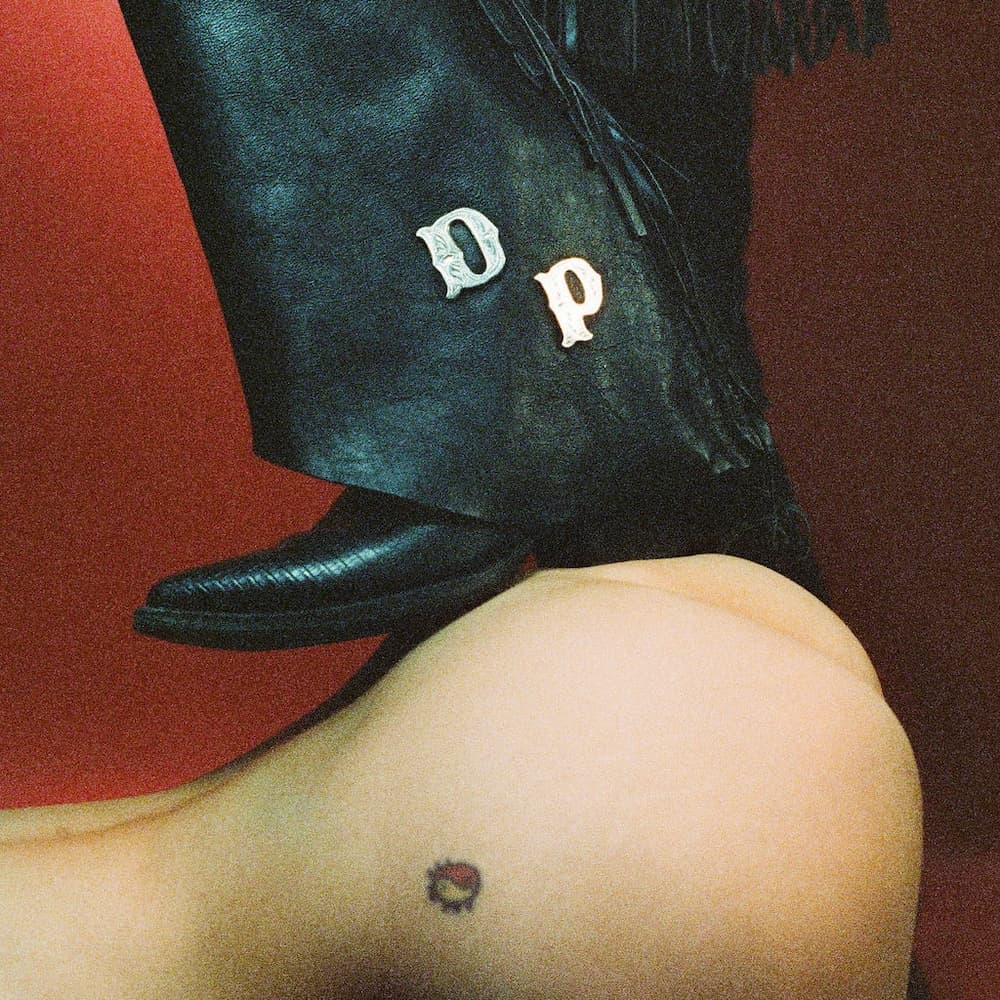
Featuring an all-star band of Sullivan Fortner (piano), Tony Scherr (bass), Kenny Wollesen (drums), her fifth album, I Wish You Would, Releases worldwide May 1, 2026 on La Reserve
Brooklyn-based guitarist, singer and songwriter Dida Pelled doesn’t just have the blues; she fully inhabits them, reshaping the venerable American music tradition in ways that are deeply personal and strikingly modern. On her provocative new album, I Wish You Would, Pelled offers an alluring twist on the blues that is daringly fluid in every way imaginable, from genre to sexuality and beyond.
Set for release on May 1, 2026 via La Reserve, I Wish You Would features repertoire largely drawn from the pens of classic blues songwriters, though as with everything she touches, there are a few surprising elements added to the mix. She’s joined by a stellar rhythm section uniquely able to follow her down whichever divergent pathway she should choose: virtuoso pianist Sullivan Fortner (Roy Hargrove, Cécile McLorin Salvant), along with bassist Tony Scherr and drummer Kenny Wollesen, whose long-enduring chemistry has carried through collaborations with Bill Frisell, Norah Jones, John Scofield and many others.
The extensive and boundary-stretching experience that each of these musicians bring to Pelled’s singular vision results in dramatic yet playful reimaginings of blues classics by the likes of John Lee Hooker, Billy Boy Arnold and Buddy Johnson, as well as resonant pieces from sources as diverse as pianist/composer Mary Lou Williams and the little-known songwriter Gladys Shelley.
Pelled thoroughly imbibes these songs and makes them utterly her own, revealing a gift for captivating, playful and often sultry storytelling. She has clearly traced this repertoire back to its roots. Beyond the surface-level impression of soul-bearing misery that so often caricatures the genre, Dida’s interpretations uncover new layers. These songs allow for intimacy, sly humor, vulnerability and sensuality. Added to that is a voracious fascination for a broad spectrum of styles spanning elements of jazz, early pop songs, and the Great American Songbook.
These nine tunes combine to form such a cohesive vision that it’s stunning to learn that Pelled didn’t conceive of the project first. Instead, I Wish You Would grew organically from the material that she and her band had been performing live. As she explains, “The idea behind this was to do the repertoire I had been doing for years, but which I hadn’t recorded yet. We thought deeply about the songs, and I picked the ones that have really stuck with me.”
That includes the Billy Boy Arnold classic that gives the album its title, which has previously been reinterpreted by the likes of Eric Clapton and David Bowie. Pelled’s pouting vocal, with its echoes of Blossom Dearie and Nellie Lutcher, make it a coy, mischievous seduction, especially buoyed by Wollesen’s joyous shuffle beat. John Lee Hooker’s “Dimples” is flirtatious rather than leering, and highlights another post-modern perspective that Pelled brings to these songs – appropriating material so often written with the male gaze in mind and transforming their meaning by not changing a word. As the celebrated vocal expert Will Friedwald points out in his historically ornate liner notes, it’s “The blues were created by a specific group of people in a specific time and place, but Dida shows us all that they are everybody’s music, and that we need them more than ever now.”
A late-career blues by the brilliant Mary Lou Williams, from a 1974 session, “Rosa Mae” simmers with a soulful groove, eliciting mesmerizing turns from Pelled’s guitar and Fortner on Rhodes. “Sister Kate,” a 1922 song believed to have been composed by an uncredited Louis Armstrong, is a high point, both for harkening back to old-time honky-tonks and for Pelled’s sinuous guitar solo, the point in the album where the timeless moan of the blues is most keenly felt.
A similarly gut-level melancholy comes across in her restrained vocal for “Since I Fell For You,” its lament so hushed, it seems an introspective memory. On “Hesitation Blues,” which may be the album’s focal point, which was recorded by nearly every great early jazz bandleader from W.C. Handy to Jelly Roll Morton, Dida hews most closely to tradition in feel and tempo, emphasizing the lyric’s impatience with a sense of being transported to the past. (In the song’s official music video, Dida sits at the edge of an almost-empty strip club stage, watching a luscious pole dancer in a neon yellow facemask, as a lone woman eyes her in the background.)
Irony reigns on “Sittin’ on Top of the World,” its achingly slow pace contradicting the carefree lyric, while the band’s rendition of “Blues in the Night” places it deep into the wee hours. Finally, “Trouble” is drawn from the female songwriter Gladys Shelley and seems to have only been recorded on an obscure album by Dakota Staton. Scherr, who switches to guitar on this track, learned the song from playing it with Staton herself, and in turn taught it to Pelled.
Dida’s sound world on I Wish You Would represents a continuum of song being carried forward and reinvented by one of our generations’ most original interpreters, wearing her own unique culture and perspective on her sleeve (and her leather chaps).