Gearbox Records
August 14
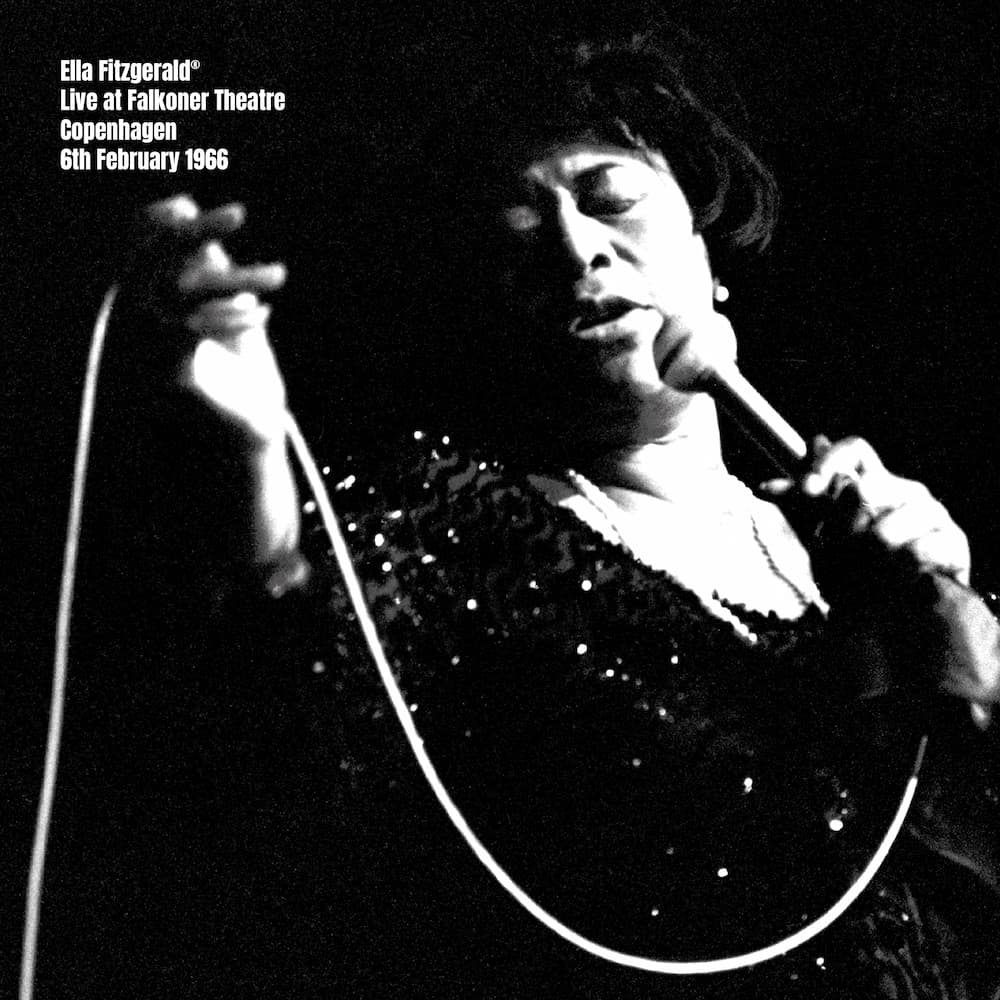
Live at Falkoner Theatre Copenhagen 6th February 1966
September 25
album-cover.jpg "Nanaco Sato/LUST(ジャケ写)album cover")
Nanaco Sato, LUST
Sept. 25 via Gearbox Records
Latest Release
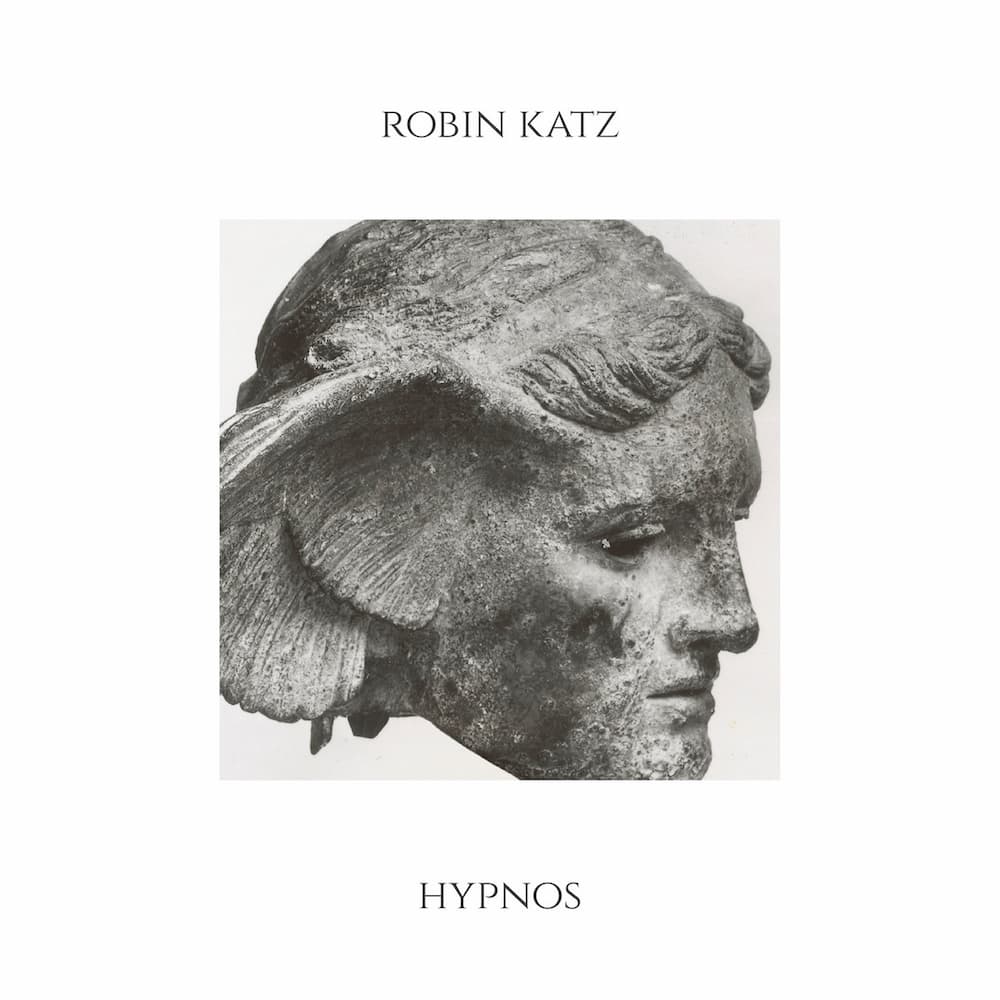
Robin Katz, Hypnos
May 29 via Gearbox Records

Videos
Liza Lo, “Birdsong”
Press
About
Franklin Kiermyer Bio
Spirit and Magic – what lies beyond mere intellect. The soul, the heart, the qualities that set us free … this transformative power of music is what drummer, composer & bandleader Franklin Kiermyer is all about.
Born and raised in Montreal, Kiermyer first gained attention in 1994 – during his long beat in New York – with his album Solomon’s Daughter featuring tenor saxophonist and former John Coltrane bandmate Pharoah Sanders. He is known mostly for the spiritual focus of his music and the expansive style, distinct sound and intense passionate energy of his drumming,
“Drummer Franklin Kiermyer is that rare jazzman – blessed with the ecstatic quality of his free-bop attack.” Rolling Stone Magazine “Kiermyer plays (and composes) with an almost evangelical belief in jazz as a form of pure inspiration.” Entertainment Weekly “Kiermyer supercharges spiritual modality…he plays with volcanic authority.” Down Beat Magazine
Mostly self-taught, it was drummers Baby Dodds, Sid Catlett, Minor Hall, and Gene Krupa that first grabbed his attention. His father’s record collection favored New Orleans music and the swing bands of the 30’s and 40’s,
Later on, Bela Bartok, Stravinsky and other 20th-century composers became great inspirations as did the music of root traditions like the Baka, Babenzele and Efe people of the African rainforest and the nadaswaram and rudra-veena music of India.
When he was fourteen, his older brother gave him a book about Tibetan Buddhism that led him to a life-long practice of meditation that would intensify over the years.
Franklin’s first professional experience was playing standards and show tunes with his high-school music teacher at legion dances and supper clubs.
Growing up in the last part of the hippie days, in the environment of the revolution, Kiermyer was inspired by the incredible freedom music of the 60’s and 70’s.
The psychedelic sounds of Jimi Hendrix and the ritual music of many of the world’s indigenous cultures surrounded him, but it was his encounter with the ecstatic music of John Coltrane and his quartet of McCoy Tyner, Elvin Jones and Jimmy Garrison that had an immediate, profound and lasting impact and brought all these influences together, focusing his intentions.
“At this point, the albums Transition, Sun Ship and First Meditations became the greatest inspirations for me. This felt like real spiritual music using honesty and faith to transcend concepts and get to the heart of things. That openness, honesty and faith became my goal.”
Leaving school at eighteen to go on the road with an r&b band, Kiermyer began to develop his own way of playing the drums. After a year-and-a-half, he moved back to Montreal to spend up to ten hours a day practising.
“All musicians come up playing from a stylistic tradition, but to go further, you need to find a way that will work for you as an individual. I’ve always learned a lot from my contemporaries and the great musicians that have come before, but I’ve been more interested in how the music felt, rather than its history. I looked for the music that moved me the most and tried to understand how it worked. My goal was always to feel both free and rooted – to get the music to feel both spontaneous and grounded at the same time. I knew that I’d have to find my own way to have that feeling when I play.”
Playing gigs around Montreal was often less than satisfying. There was a disconnect between the more traditional music that most of these situations called for – “like a lot of places, Montreal is still somewhat stuck on Jazz being history” – and the more personal way of playing that Kiermyer was developing. His reputation as difficult and wild resulted in an isolation that forced him even deeper into researching what made the music that moved him. By his mid-20s, he had a set of compositions and a way of playing the drums that needed wider experience to grow.
Moving to New York City, he began a residency that lasted more than twenty years. His first eight albums were recorded during this period: Break Down The Walls, In The House Of My Fathers, Solomon’s Daughter, Kairos, Auspicious Blazing Sun, Between Joy & Consequence, Sanctification and Great Drum of the Secret Mirror.
“love your new album … obviously…wow! Played a track on my last show!” GILLES PETERSON WORLDWIDE • “His writing is fiercely primal and his drumming ferocious, unbridled… captures that mystical ecstasy with magnificent aplomb” JAZZIZ • “The transformative energy of Scatter The Atoms That Remain – A phenomenon on the current jazz scene.” LEVANTE + VALENCIA PLAZA SPAIN • “Spiritualism, Magic and Soul” – GAESTELISTE GERMANY • “A relentless pulse that conveys incredible strength … a sublime spirituality that envelops the entire album” JAZZ COLOURS (Italy) • “By its fervor and its sincerity, by the vibration that runs through all its music with an intense thrill, the quartet commands respect.” CITIZEN JAZZ (France)
Along with his musical life, spiritual practice and meditation had always been a constant. Having reached a turning point in his evolution, Franklin recognized that to go further required an even greater devotion to the direct experience of freedom.
“This is when I really started to understand the deeper elements behind the music. I started to see that I’d have to address the personal underlying conditions that allow music like that to manifest. I realized I had to open my heart and mind more. I had been looking around me for what was holding the music back, but ultimately it was me.”
He would spend most of the next ten years focused mainly on meditation and practice, much of this in remote solitary retreats in the Himalayas and other parts of Southeast Asia.
“Over the years, I never gave up on my goals. I shifted my focus to more directly working through what was holding the music back. Things have changed for me. The part of my life where I was chasing was ending and the part where I was finding was beginning. I became freer in my conception. ”
Scatter The Atoms That Remain is the title of Kiermyer’s new album and was the name of his band from 2019 to 2024. Scatter The Atoms’ first release, Exultation, was co-produced by Kiermyer and legendary producer Michael Cuscuna, as was Kiermyer’s albums Closer to the Sun and Further.
“Franklin Kiermyer conveys a spiritual feeling through his music that reaches each listener in different ways. It’s the urgency you feel when you listen. Franklin got beyond his influences and comes through with him as an original player – his feel, his rhythmic patterns. He has his own way of playing the drums, his own way of organizing music, his own way of unfolding a performance.” – Michael Cuscuna
Franklin has had the great good fortune to perform and/or record with many wonderful artists, including Pharoah Sanders, Sam Rivers, Tisziji Muñoz, Billy Harper, John Abercrombie, Dewey Redman, Randy Brecker, Gary Bartz, Juini Booth, Don Alias, Gene Perla, Chris Gekker, Joe Lovano, Daniel Ponce, Azar Lawrence, George Garzone, Isaiah Collier, T.V. Gopalakrishnan, Vernon Reid, Reggie Workman, Leo Genovese, Nat Reeves, Keyon Harold, Jeff Bhasker, Davis Whitfield, Rakalam Bob Moses, Géraud Portal, Linda Sikhakhane, Aaron Parks, Carlos Niño, Nate Mercereau, Carter Jefferson, Emilio Modeste, Drew Gress, Umdze Lodro Samphel, John Stubblefield, Debashish Battacharya, Lawrence Clark, John Esposito, Hassan Hakmoun, Michael Troy, Dave Douglas, Peter Madsen, Jovan Alexandre, Michael Stuart, Tom Chess, Dave Fiuzcynski, Anthony Cox, Benito Gonzalez, Eric Person, Fima Ephron and Abraham Burton among others.
“I feel very blessed learning so much from these people.”
Emancipation Suite, released in 2022 as a limited edition LP, was chosen as one of Down Beat Magazine’s best albums of the year. “Scatter the Atoms That Remain calls for universal freedoms such as it enacts.” Howard Mandel, Down Beat Magazine
The forthcoming new album SCATTER THE ATOMS THAT REMAIN out September 18, 2026 on GEARBOX Records is co-produced with Jason Olaine and features performances from Davis Whitfield, Jeff Bhasker, Isaiah Collier, Jasbir Jassi, Keyon Harrold, Rakalam Bob Moses, Aaron Parks, Carlos Niño, Linda Sikhakhane, Nate Mercereau, Géraud Portal, Otto Gardner, Melanie Charles & Temitope Momorebe Gospel Singers.
“Franklin Kiermyer offers a sense of shared catharsis through music that is at once majestic, ferocious, and relatable. When music writers are tasked with describing Kiermyer, the words “ecstasy” and “ecstatic” appear almost predictably, but sometimes a word is just right. Kiermyer’s “Scatter The Atoms That Remain”` channels the kind of beautiful, disciplined intensity exemplified by late John Coltrane. This type of universal, non-denominational spirituality simply feels good.” – Jazz At Lincoln Center
Ella Fitzgerald Live at Falkoner Centre, Copenhagen, 6th February 1966
Play like no one’s recording.
The moment that the spirit of the performance becomes aware that it’s being documented, it changes. That shift comes in many guises, from “put a little extra on it” to “the review that hasn’t been written yet would like a word.” Call it the observer effect. Call it Tuesday night versus the night the label shows up to make the live album.
The night before Ella Fitzgerald walked into Konserthuset in Stockholm and recorded what became The Stockholm Concert, 1966, the Pablo Records live album now considered among the essential documents of her late career, she played two concerts at Falkoner Theatre in Copenhagen. Nobody in that room was playing with thoughts of a pending catalog number. The tape was a Danmarks Radio broadcast, mono, introduced on air by broadcaster Børge Roger Henrichsen and filed in a Danish producer’s private archive, where it languished for decades, earmarked for the trash bin.
This record was on the brink of non-existence. It isn’t. Gearbox Records head Darrel Sheinman got there first.
Henrichsen’s radio introduction is worth unpacking. He was a keen observer of Ella’s previous Copenhagen appearances, and was struck by something he heard that night. Duke Ellington’s orchestra was present but the Duke himself was absent. His horn section backed Ella on most of her set; however it was Jimmy Jones at the piano, in addition to his roles as arranger and musical director. With him on both Copenhagen sets were Joe Comfort on bass and Gus Johnson on drums. While Henrichsen noted the orchestra “surprisingly lost some of the distinctive character it still has under Duke Ellington’s direction,” Ella, he observed, “appeared more lively and less mechanical than at her concerts in Copenhagen in recent years with just a trio.”
The larger ensemble, even without its most distinctive voice at the keyboard, clearly did something for her.
That observation lands differently once you know what Copenhagen meant to her. She had been performing there since 1952, returning regularly over the following ten years and recording an album there in 1961. She also had an apartment in Klampenborg on the coast north of the city. Like many other Black American jazz musicians of that era, Denmark felt more like home than the USA — it was one of the European cities where Black American jazz musicians found a degree of respect the United States too often denied them. Ella’s ease in her adopted home was palpable when she walked onto the Falkoner Theatre stage that Sunday.
By early 1966, her legendary Verve Songbook cycle was behind her, and those eleven albums redefined her standing as an interpreter of the American popular canon. Her collaboration with Ellington was well underway, having produced Ella at Duke’s Place the previous year. The Copenhagen programme highlights that moment with Ellington and Strayhorn material alongside the scat showcases that were hers alone, and the deepstandard balladry she had been carrying for twenty years. The first seven tracks are the evening concert with the full orchestra. The final three, “Só Danço Samba,” “I’m Just a Lucky So-and-So,” and “Mack the Knife,” come from an earlier afternoon set with just the Jones Trio. Ella and the trio send the audience home with help from Cootie Williams on trumpet and Jimmy Hamilton on clarinet.
The two nights share substantial programme overlap, but while Stockholm gets the Duke, Copenhagen gets Mack the Knife. Ella made this song her signature in February 1960 in West Berlin when she forgot the lyrics mid-performance and improvised her way back with scatting and good cheer. It’s the kind of grace under pressure we all wish we could summon on demand. That sentiment was widely shared—the performance won Ella a Grammy, and the song never quite went back to anyone else with the same authenticity. Gus Johnson was on drums that night in Berlin too. Six years on, same drummer, same song, different city. Ella still owns it.
Dance like no one’s looking. Sing like no one’s recording. The Stockholm Concert earned its rightful place in the jazz canon. This is the night before, in the city she loved, on a tape that nearly didn’t make it. And on that tape, a singer who isn’t singing like she’s thinking about royalties, charts, or even what comes next. She’s singing like she’s thrilled to be home.
Words by Syd Schwartz
Syd Schwartz curates @jazzandcoffee and writes the Jazz and Coffee Substack. He has written liner notes for Miles Davis, Art Blakey, John Coltrane, Bill Evans, Wayne Shorter, and other jazz legends.
Art Blakey and the Jazz Messengers
This was no finishing school. Blakey’s top-flight university only accepted the best, and the expectations were high. The Messengers weren’t a group in the conventional sense, but a revolving door of prodigies learning the survival skills to thrive, or risk being left behind on the bandstand as the tour bus moved on to the next gig.
By 1982, Blakey was deep into the fourth decade of his mission. The 50s and 60s had proven the model, with iconic records and careers that continue to shape jazz conversations globally. The 70s were less kind to Blakey’s brand of jazz, resulting in fewer recordings. But his persistence in sourcing new talent and relentless touring paid off at the turn of the decade. The arrival of Wynton and Branford Marsalis in 1980 marked the beginning of a neo-traditionalist revival—and the Jazz Messengers were engineered for the occasion.
Recorded live in Strasbourg, France (most likely at La Maison de la Radio) on April 1, 1982, this concert captures a freshly retooled lineup that had just emerged from the long shadow of the Marsalis brothers. Wynton and Branford, having risen rapidly under Blakey’s wing, were already out the door, chasing their own paths and reshaping the jazz landscape. Their departure might have destabilized a lesser band. Blakey used it as an accelerant.
In their place came a new frontline—also from New Orleans, just like their predecessors. As Wynton Marsalis was on his way out the door, he recommended a teenaged trumpeter in Lionel Hampton’s group with remarkable chops and incredible tone. Blakey took Marsalis’s endorsement, bringing trumpeter Terence Blanchard into the fold. Also joining on alto sax was Donald Harrison, bringing the grit and groove of his city’s second-line tradition to the Messengers’ harmonic warfare. Then there was Detroit native Johnny O’Neal on piano, making one of his first recorded appearances with the band. O’Neal’s gospel roots and a right hand that sounded like Oscar Peterson trying to outrun Art Tatum brought a more extroverted swing than his predecessor, Donald Brown. They joined veteran Messengers Charles Fambrough (bass) and Billy Pierce (tenor), forming a new early-’80s lineup built for stamina, swing, and rapid evolution.
That’s immediately apparent on Fambrough’s “Little Man,” which sets a tone of confident swagger and combustible interplay for the evening. “Along Came Betty” is a throwback to the Messengers’ 1958 Moanin’ prime—a not-so-subtle gauntlet thrown at the feet of the new horn line. “Fuller Love,” penned by Harrison’s predecessor Bobby Watson, is classic Blakey livebook-as-lab philosophy: learn what came before, then light it up your own way.
More surprising are the repertoire curveballs. “Eighty-One,” a staple from Miles Davis’s Second Great Quintet, stretches the band’s harmonic vocabulary beyond the hard-bop wheelhouse, allowing Blanchard room to explore and Harrison license to go off-script. The two ballads—“I Can’t Get Started” and “I Didn’t Know What Time It Was”—function as tension valves and spotlights. The former gives Blanchard a lyrical runway; the latter conjures ghosts of the Messengers’ Shorter-era. And no Blakey gig feels complete without “Moanin’,” a rite of passage for every musician passing through the collective.
The discovery of Strasbourg ’82—previously unknown to discographers aside from a few vague “private recording” mentions—fills a key gap in the documented history of the band. It sits directly between Keystone 3 (January 1982), featuring the Marsalis-era group, and Oh-By the Way (May 1982), featuring this lineup in a more polished studio setting. Unlike the sketchy live compilations and dodgy bootlegs cluttering streaming platforms, this one’s the real deal: high-fidelity, high-stakes, and musically urgent. It also stands as the earliest full-length live document of the Blanchard/Harrison edition of the Messengers—a unit that would define the band for the next few years and help power the Young Lions movement from revivalism into something deeper.
Blakey, at 62, wasn’t mellowing with age. If anything, he was doubling down on the mission. “You go to school to get your diploma,” he once said. “You come with me to get your education.” Strasbourg 82 is that education in progress: live, unfiltered, and captured at the moment the university was being rebuilt.
Liza Lo Artist Bio
Brought up between the Netherlands, England and Spain, Liza is influenced by a wide variety of music. Inspiration for Liza ranges from Laura Marling, Big Thief and Carole King to Billie Marten, Maro and Flyte. Growing up, Liza was surrounded by flamenco music, played live by family and friends at home. This love for playing and sharing music in a community sparked a love for guitar playing and intimate story telling. A few years later, being mentored by Jon Kelly, who worked with incredible artists like Kate Bush and Paul McCartney, has pushed Liza to record her songs with her entire live band. The band, Liza and Jon set off to Studio 13 in West London and recorded ‘Familiar’ direct to tape. A lesson in learning to accept impurities in a recording and choosing the song for the feeling of the take, rather than the perfection of the recording. Jon and Liza sat down weekly, going through Liza’s newly written songs and were together collecting the right ones for the album over the course of 10 months. The band came together and jammed the songs in the studio for the first time, just before recording them, trusting everyone’s initial instinct with the songs and allowing an element of surprise whilst recording.
More stripped back songs like A Messenger and Darling carry the core of Lo’s inspiration, keeping the songs as simple as possible, to just convey the message of the song was the goal here. Whereas bigger songs like Morning Call, Catch The Door and Gipsy Hill were developed thoroughly with the whole band and more inspired by bands like Big Thief or Flyte, to bring together a sonic field that supported the song but also where the instrumentation led the writing.
Liza Lo Artist Statement
Jon became my mentor at the start of 2023, he told me lots of stories about his time recording Paul McCartney and Kate Bush, Jon being an obvious, incredible inspiration to me. I was studying music production at the time and was lucky enough to have met Jon in a masterclass about mixing. I played him multiple demo’s and we spoke a lot about my live band and Jon and I started speaking about what it’d look like to record with all of them in the studio I had access to during my studies, and so we did. Meeting the team at Gearbox and having Jon as my mentor allowed me to trust in this new way of recording my songs. We brought the music to life by focusing on one main element: to keep it live, so we brought the whole band together in the studio. We recorded the songs direct to tape at Damon Albarn’s Studio 13 in West-London and Sean Hargreaves’ studio in Camden. I’d written all the songs and brought them to Jon and we’d together decide which ones were worth trialling with the band and which ones I needed to finish writing. It was honestly the most fruitful of times.
Chihei Hatakeyama Bio
Shun Ishiwaka Bio
Bio – Darrel Sheinman, Gearbox Records
A drummer from the age of 13, Darrel played in various punk bands before moving to jazz, groove, and funk. Whilst pursuing successful careers as a commodities trader and maritime security professional, Darrel continued to nurture his passion for music via his habitual crate-digging for rare, original Blue Note pressings and a strong addiction to high fidelity audio. In 2009, this led to a change in career path and the beginnings of Gearbox Records.
Initial Gearbox output stemmed from Darrel’s explorations of the British Library archives, which led to a slew of first-time commercial releases from cult British jazz icons that included saxophonist legend Tubby Hayes and pianist Michael Garrick. Under the mentorship of famed engineers Sean Davies, Darrel was inspired to build an all-analogue cutting and mastering studio based around vintage vacuum tube tape machines and a 1967 Haeco Scully lathe, to which one can attribute the signature “Gearbox sound.” More recently and under Darrel’s A&R leadership, Gearbox has been at the forefront of the UK contemporary jazz revival, having released music with acts such as Binker & Moses, Theon Cross, and Sarathy Korwar. As well as jazz, Gearbox has evolved organically into other genres and styles of music, from Brazilian no wave to ambient electronic to lo-fi soul, with a focus on quality being the deciding factor.
A frequent visitor to Japan, Darrel holds a black belt in kobudo martial art practices, something that he shares with legendary pianist and Gearbox signing Abdullah Ibrahim. His admiration and appreciation of Japanese culture led him to introduce monthly “kissaten”-styled listening sessions to the Gearbox studio, open to the public, which proved popular and have resulted in a monthly residency on London’s Soho Radio show.
Ever the entrepreneur, Darrel opened a Gearbox Japan office in Spring 2020, making Gearbox one of the first ever independent labels to do so.