Jim Kweskin
Coming Soon
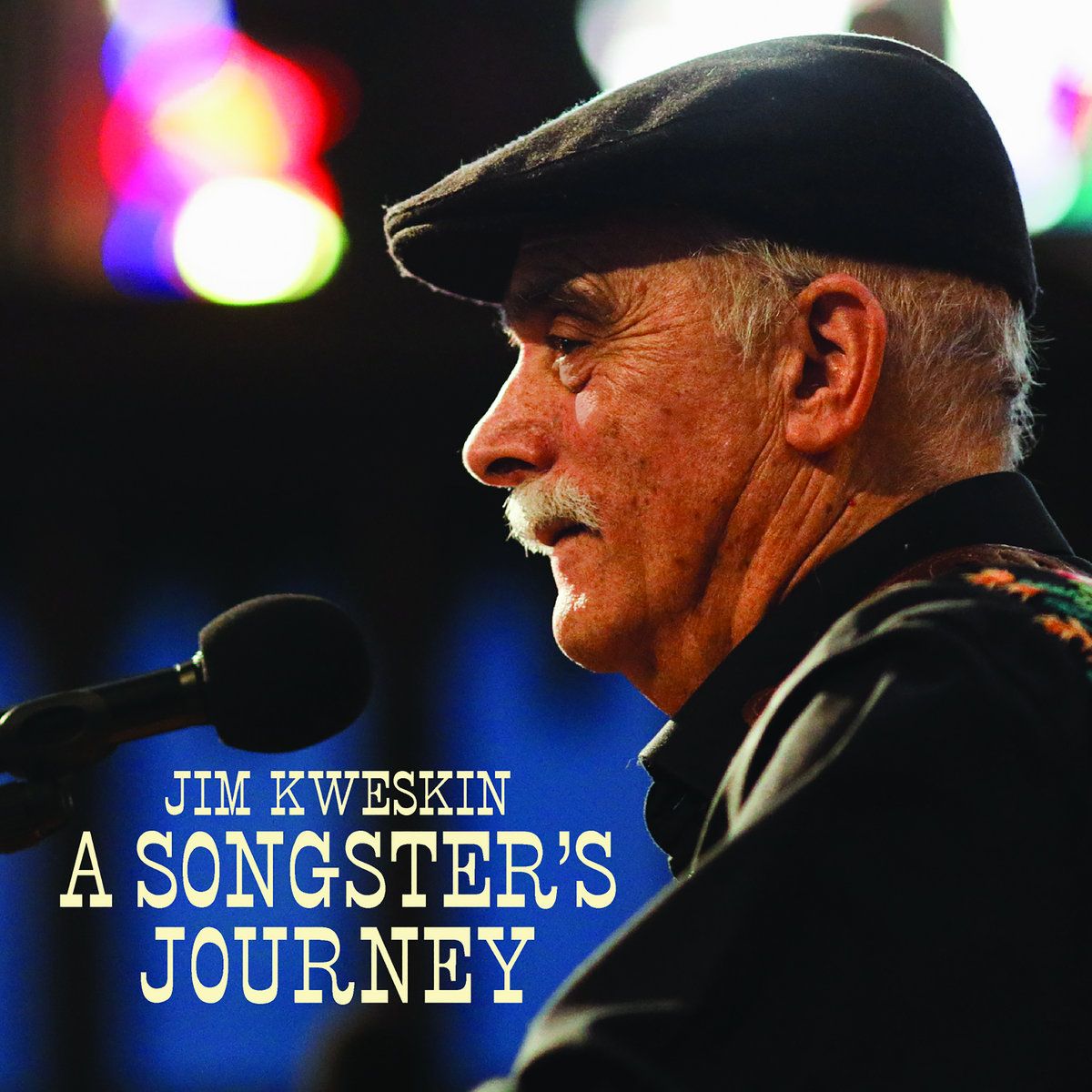
Jim Kweskin, A Songster’s Journey (11.20.26 via Jalopy Records)
Videos
Live at Paste Studios
Press
About
Liner Notes
Those of you who have been to one of my shows know that I like to share the histories of the tunes I play, and of the many wonderful artists who wrote and/or recorded them. My great joy is in keeping these great old songs alive.
This album features a lot of genre crossings — from traditional jazz tunes, Tin Pan Alley, gospel tunes, country blues, Irish and Bahamian to early country music. It is part of the Songster tradition. Rather than creating original compositions, Songsters tend to revitalize songs. Some of the more famous early Songsters we know from recordings include Leadbelly, Mississippi John Hurt, Mance Lipscomb, Jesse “Lone Cat” Fuller, and Big Bill Broonzy — legendary artists who sang songs across genres. They didn’t just sing blues, or country, or folk, or pop, or jazz. They sang it all: whatever song suited them, whatever people wanted to hear.
That’s always been my thing, even back in the ’60s with my first band, the Jim Kweskin Jug Band. We did songs from wherever they came, that we thought we could represent well. We delved deeply into the Harry Smith Anthology of American Folk Music, (which can now be found on Smithsonian /Folkways label) and the Library Of Congress catalog, mostly recorded in the field by Alan Lomax. We revived old folk songs, jazz standards and pop and country songs from the ‘20’s, ‘30’s and ‘40’s. Of course, a primary source for us were the recordings of the great jug bands of the late ‘20’s and early ’30’s.
I love early country music, like Jimmy Rodgers, the Carter Family. I am still in awe of the great country blues artists like Lemon Jefferson, Robert Johnson, Willie McTell and Frank Stokes. As a kid I listened to Louis Armstrong’s Hot Five, Sidney Bechet, Fats Waller (a big influence), Bessie Smith and Cab Calloway. I also loved the R&B that was popular on the radio when I was in high school like Johnny Ace, Ray Charles, Fats Domino and Chuck Berry. And I love Broadway musicals — especially from about 1932 to 1959, everything from *Show Boat* to *The Sound of Music*. I like to take the great old songs from wherever I find them and do them in a way that fits me.
The mix of styles and genres on this album is so broad that organizing the bands took some doing. We had two three-day sessions. The first grouping was some of my favorite jazz players drawn primarily from Boston and New York City, as well as a stellar fiddler from Los Angeles and two longtime collaborators and friends from Germany. We did those songs with horns (trumpet, trombone, saxophone and clarinet). Then we had another three days of folk/country tunes with Cindy Cashdollar on slide guitar (Dobro and steel), and Suzy Thompson on fiddle.
There is a story behind every track on this album.
Would You Like to Play the Guitar is a song that I have played in concert for years and never recorded. The melody is from a Bing Crosby hit “Swing on a Star” from the movie *Going My Way*, which won the Academy Award for Best Song in 1945. I fell in love with this version the first time I heard it. The words were written by Pat Donahue, a great musician, guitar player, songwriter, and entertainer. I changed it a little, like I usually do. Everybody who sings a song invariably changes it to make it their own. Pete Seeger calls it “the folk process.”
Just Because is best known for the 1935 version by the Shelton Brothers, and they are often credited for the composition. But the first recording was by Nelstone’s Hawaiians in the late ‘20’s.
I learned Dig My Grave from a series of Folkways records that came out in the late ’50s. Sam Charters, a musicologist, went down to the island of Andros in the Bahamas and discovered legendary guitarist Joseph Spence. Spence is one of my all-time favorite guitar players. Charters’ recording was called *Music of the Bahamas*, and Joseph Spence is heard on Volume 1. Volume 2 featured a local a cappella group — with lead singers Frederick McQueen and John Roberts. They do “Dig My Grave” very slowly. I took that slow version and gave it some rhythm and, along with Samoa Wilson and The Lymanaires, tried to play it in the style of Joseph Spence.
Mind Your Own Business is a Hank Williams tune. I wrote new verses, modified some, and took others out. He sings a verse about someone listening in on a party line. Nobody knows what a party line is anymore–they’ve been gone 80 years. So I wrote a verse about a neighbor spreading my business all over town, and another about the current state of affairs — “if the government is interested in what I do, they can tap my phones, hack my texts and emails too, so why don’t they mind their own business”. Hank sang it with his band, the Drifting Cowboys. We bring a swing feel to it. Of course it’s the same song, just changed a little.
Right Now Blues is from Frank Stokes, a musical giant whom I believe has been overlooked. Stokes was part of the Beale Street Sheiks and recorded most of his songs with guitarist Dan Sane. When people talk about the great country blues singers, they are usually referring Robert Johnson, Blind Lemon Jefferson, and Blind Willie McTell. Hardly anybody mentions Frank Stokes. Maybe it is because Stokes came from the string band tradition and did not play Delta Blues. In my opinion he was one of the great ones.
I’m Beginning to See the Light is a Duke Ellington tune, which we play with a bit of a western swing feel. I had the audacity to change one of the chords. Even Duke Ellington is subject to the folk process — a song handed down from person to person is always going to be a little bit different.
I’ve heard many different Irish groups do The Moonshiner, including the Clancy Brothers. There are many different versions of this tune. This one is an Irish pub drinking song.
I Love You Because. I love to sing this Ernest Tubb song to my wife. Tubb, and his contemporaries, Lefty Frizzell, Roy Acuff, Webb Pierce, and Hank Snow were among the first Nashville singers who came out of the Jimmie Rodgers and western swing tradition to create, along with Hank Williams, Kitty Wells and others, the commercialized country sound we think of today.
Chattanooga Choo Choo was a massive hit for the Glenn Miller big band in 1942; that release is often credited as the first “gold record”. Dennis Lichtman wrote this arrangement. He figured out how to make the horns and drums sound like a train.
I’ve always loved singing The Gambler. It works especially well to have a group singing with me. On our recording, there’s a whole gang joining in the way the audience does when I do it live. Suzy Thompson does some remarkable Cajun-style fiddling, adding a whole new dimension to the song.
I first learned Dr. Jazz from the classic, spectacularly great, original recording by Jelly Roll Morton’s Red Hot Peppers, with Omer Simeon on clarinet, George Mitchell on cornet and Kid Ory on trombone. Subsequently, I heard a big band version of it by Woody Herman, where he sang an intro verse that I didn’t even know existed. I love bringing back verses that people have forgotten.
Bye Bye Blackbird was a favorite of my late friend George Peper. Many times we sat in our living room and played together. He heard it in the movie *Melvin and Howard*, sung a cappella by the actor Jason Robards. I already knew the song from Gene Austin’s 1926 recording. That is where I learned the two verses that we included on this recording.
Never Let Me Go was recorded by Johnny Ace in 1953 at the same time as his huge hit “Pledging My Love”. Paloma Ohm does an incredible job on alto sax, filling in around the melody and channeling Sonny Rollins from the Rolling Stones “Tattoo You” album. Rollins died a few days after we recorded it. This is another song that George Peper and I often played together.
Glory of Love was written in 1936 by Billy Hill, who was born and raised in Jamaica Plain, in the same section of Boston where we recorded this album. Our version came from two directions at once. It was a hit for Benny Goodman with Helen Ward on vocal in the year it was written, then later recorded by Big Bill Broonzy, who picked it on the guitar and played the hell out of it. Broonzy’s recording inspired me to learn the song.
Mary on the Wild Moor comes from an English broadside ballad, originating in the early-1800s. It probably crossed the Atlantic and spread through the Appalachian folk tradition. There’s a beautiful recording of it by the Blue Sky Boys. This song might be one of the saddest and most depressing songs you’ll ever hear — every single person in it dies. But it’s so beautiful and moving.
Culpable Soy (Noche Serena) is a traditional Mexican song I learned from my friend, Joel Luna, who came from the Dominican Republic. He used to sing it a cappella, and I learned to pick it on the guitar. I asked Leo Blanco, a great pianist from Venezuela who I knew as a student and who currently teaches at Berklee School of Music, to write the arrangement. Leo went all out, an amazing composition. I play a little guitar at the very start, the way my friend, George Peper, and I used to play at a table in our living room, and then it opens up into horns and a full arrangement.The song is a prayer for forgiveness addressed to Christ the Nazarene, where the singer acknowledges their guilt and need for redemption. It expresses deep remorse and the hope of receiving divine forgiveness. Through music, it seeks a spiritual connection and release from the sorrows caused.
Needed Time is a song I learned from a record by the great Texas blues man, Lightnin’ Hopkins. It was originally a gospel tune. I changed the words to make it less religious and more about needing each other, our brothers and sisters, family and friends, in difficult times. Many of the early blues singers also sang gospel and church songs. Blind Lemon Jefferson, for example, did a bunch of religious recordings under the name of Deacon L.J. Bates. It was a common practice.
Still Not Dead was written and recorded by Willie Nelson. Again, I changed some of the lyrics and the chords in the bridge, but it’s still a Willie Nelson song.
*
It is difficult to categorize this collection. It is as varied as the many cultures and traditions from which the material is sourced. The wellsprings are deep: blues, ballads, ragtime, old time, country, dance tunes, jug band, mid-nineteenth century minstrel songs, pop tunes of the day, gospel, string band music, are just a small part of this fantastically rich heritage. This project is not just to keep these great old songs going, but, hopefully, to give them new life.