
Dida Pelled
Out May 1, 2026
Via La Reserve
Watch
Dida Pelled, “Dimples”
Watch
Dida Pelled, “Hesitation Blues”
Press
About
Liner Notes
Which brings us to this new album by Dida Pelled. The artist herself is a living, breathing hyphenate: a singer, guitarist, songwriter, bandleader and occasional provocateur, who is based in Brooklyn and derives from a combination of Iraqi, Thai, and Polish roots. Dida Pelled shows us that the blues are not only intimate and magisterial but a lot of other things as well, starting with sexy and funny—and maybe even a little bit kinky. She has titled the album after Billy Boy Arnold’s classic song, I Wish You Would, but still, if I had to come up with a subtitle to correlate with Ellington and Marsalis, I would call this album “The Playfulness of the Blues.”
By playful, I mean that she sings in an engaging, sweet, and endearing high-pitched voice that connects her to the legacy of such pioneering female instrumentalists / vocalists as Blossom Dearie, Nellie Lutcher, and Rose Murphy. Dida extends the strength of these foremothers without trying to sound like them, or to copy anyone else either, for that matter. Dida also aligns herself with legacy masters such as Billie Holiday, Nat King Cole, and Peggy Lee, who all knew well how to use the medium of the blues to tell a coherent story. Every track here is a credible narrative, a story that really goes somewhere.
All the elements here, her singing, her own playing, and that of her backing trio behind her, are very open, with a lot of space between the notes, and between the instruments as well, are key factors in the sexiness, the eroticism, as well as the playfulness of the music. As a collective, Dida, her amazing virtuoso pianist Sullivan Fortner, and the long-enduring team of veteran bassist Tony Scherr and drummer Kenny Wollesen are remarkable; Sullivan is one of the most lauded keyboardists of his generation, a superstar in his own right, and Tony and Kenny have been playing together for so long that they have become perhaps the greatest pair of team players in contemporary music. They know how to avoid the pratfalls of younger players who try to fill every space—they note that the distances between notes are equally important.
What’s especially amazing, to me at least, is that none of this seems to have been deliberately planned by the artist herself. As Dida tells me, “The idea behind this was to do what I was doing at my shows, with a great band interacting great with each other, and to do the repertoire that I had been doing for years, but which I hadn’t recorded yet for some reason.” She adds, “So it was mostly about the songs. We thought deeply about the repertoire, because I’m always thinking about it and there’s so many tunes I play, so I was picking the ones I want, the ones that have really stuck with me. She notes that she didn’t consciously realize that she was planning an album with a specific concept, but as she and producer Matt Pierson were listening to the tracks and looking at the song list, it’s clear that this is exactly what she was doing.
Even without Dida being conscious of it, or planning for it, a theme emerges. Throughout, she consistently manages to find the upbeat and positive aspects of whatever song she’s singing, as well as whatever genre or subgenre of music she happens to be in. No one, for instance, would associate John Lee Hooker, he of the Mississippi Delta, or Chicago’s own Billy Boy Arnold, with the lighter side of the blues—they’re not thought of as musical comedians, the same way we think of, for instance, Louis Jordan. Yet she has found the lightest —not to mention the cutest—songs ever associated with those two venerable bluesmen, “Dimples” and “I Wish You Would.”
I tend to think of Hooker as a representative example of the darker, heavier end of the blues, and it’s a revelation to me that one of his signature songs could serve as the basis for such a cheerful, danceable number as Dida’s version of “Dimples.” Mr. Arnold’s own classic version of “I Wish You Would” draws from the inspiration of his longtime collaborator Bo Diddley, and their shared vision of the blues, which was also dark and even kind of scary, hypnotic, but also highly sexual. Subsequent interpreters of “I Wish You Would,” such as those by British rock stars Eric Clapton and David Bowie, tend to make the song sound even more menacing. Conversely, Dida and company have cast it in what might be considered a postnuclear shuffle beat, setting in a bright engaging manner that really makes you want to move. Dida shows that there’s a sense of humor running all through the blues, even where we don’t expect to find it.
The blues, as Dida shows us, are also a functional bridge, a transitional point to other related musics, such as jazz, country music, and the Great American Songbook. “Since I Fell For You” and “Blues in the Night” make for intriguing opposites in terms of their historical trajectories. “Since I Fell For You” is the work of the African American pianist, bandleader, and prolific composer Buddy Johnson, who worked exclusively in what they called the “race” market but who wrote several songs that, like this one (“Save Your Love for Me” is another) eventually, found their way into the pop music mainstream. “Since I Fell” was never the province of the iconic solo guitarists-and-singers—I’m thinking about the eloquent Lonnie Johnson here—but that’s what Dida transforms it into here, bringing this blues / pop song into yet a whole other tradition. Dida’s vocal is especially expressive and poignant here.
“Blues in the Night” is that rare standard of the genre—accepted as part of the canon by authentic artists such as Big Joe Turner and Dinah Washington—even though it was composed for a movie by a pair of songwriters, Harold Arlen and Johnny Mercer, who spent their careers writing for Hollywood and Broadway. This is a longish song, with a middle section that is often trimmed, but in Dida’s hands, it’s a highly compelling narrative. I also like how she plays with the list of “big towns” to include “from Brooklyn to Soho.” (Johnny and Harold would surely approve as well.)
“Hesitation Blues” may be the album’s focal point, although I can understand why she wouldn’t want to make it the title song. This is essentially derived from a musical idea in the Black folkloric tradition—having to wait for an amorous assignation with a reluctant lover, and getting impatient— that manifested itself in at least two widely varying ways in blues and jazz. First, and perhaps better known, is the very popular version by W. C. Handy, which he called “Hesitating Blues.” Still, Handy’s self-described rival, Jelly Roll Morton, recorded a rather different take (famously for the Library of Congress in 1939) and a lot of other performances, including many country recordings, follow Morton’s model. (Side note: Elijah Wald, in his excellent 2024 study, Mister Jelly’s Blues, speculates that the reference to a “parasol” probably meant the male sex organ; we don’t know what Jelly meant by a “waterfall.”) This is a rare example of Dida deliberately re-interpreting a specific historical recording, matching it in terms of tempo and timing, but still adding her own inimitable stamp to it.
“Hesitation Blues” also contains a reference to a dancing sister getting a lot of attention (“Mama, look at Sis….”), which is the primary subject of “Sister Kate” (a 1922 song believed to have been composed by a young Louis Armstrong, who never got his proper credit or royalties). Sister Kate famously did the shimmy, but thanks to Dida, who plays some very eloquent single string guitar here—a thing of wonder unto itself—she’s now doing a whole new dance.
“Rosa Mae” is a late-career blues by the brilliant Mary Lou Williams, from 1974 session with the great bassist Bob Cranshaw; Dida has unearthed a set of rare lyrics by Williams, which she sings briefly at the end.
“Trouble” comes from the female songwriter Gladys Shelley, and seems to have only been recorded on an obscure CD by the marvelous Dakota Staton. Dida notes that her bassist, Tony Scherr knew the song from having played it with the late, great Dakota herself. That legendary lady taught it to Tony, and Tony—who switches to guitar on this track—taught it to Dida. “Trouble” is also in keeping with the mood of the album that Dida tells us that this particular brand of trouble “is so good to me.”
“Sittin’ on top of the World” is the 1930 blues standard by the Mississippi Sheiks, also famously later performed by Howling Wolf and still later by Eric Clapton and Cream. Dida takes it slowly and deliberately, but even so, as with all the other tracks in this exceptional album, she plays up the discrepancy, the mood is slow and despondent, yet the singer insists that she doesn’t worry. She finds the inherent joy in the lyrics, the notes, and most especially, the spaces in the notes, that everybody else misses.
Throughout, Dida, Sullivan, Tony, and Kenny all make their own valid and individual contributions, but also follow the leader’s singular vision. She’s taken a collection of songs that go back a hundred years in some cases and not merely updated them, but repurposed them from the inside out and showed us what about them is timeless. She’s focused on the blues, but expands outwards to incorporate elements of jazz, traditional pop music, and the Great American Songbook. Dida has created music that’s inclusive rather than exclusive.
It’s also safe to say that the composers of these songs had no idea that they would someday function as odes to same-sex love; it’s not just “all the boys in the neighborhood” who are treating Sister Kate so good. The blues were created by a specific group of people in a specific time and place, but Dida shows us all that they are everybody’s music, and that we need them more than ever now.
Written by Will Friedwald
Bio
Dida Pelled seems like she could steal your girlfriend in a New York minute. A jazz prodigy, her talent and laid-back charm have a universal appeal across genres. The Brooklyn-based guitarist, singer, and songwriter is known for her playful personality with a dedication to authenticity. Pelled’s career represents a life-long devotion to music, while her following has grown around a certain steadiness and charm, wide-ranging in its inspiration and deeply intimate.
Whether she’s delivering a jazz standard, a scorched blues, a torch song, or an original, Pelled’s gift is palpable–in every room she plays, she has the audience in the palm of her hand; every lyric hitting just so. Audiences leave her shows with their tastes enriched and emotional worlds expanded.
Pelled moved to New York at age 20. As a freshman at The New School, playing a bar gig in the West Village, she was discovered by trumpeter and producer Fabio Morgera, who offered her the chance to make her first album. Featuring jazz greats Roy Hargrove and Gregory Hutchinson, this breakout album Dida Plays and Sings (Red Records, 2011) was promptly named one of AllAboutJazz.com’s albums of the year. The album was praised for its distinctive combination of warm, emotive vocals and soulful, highly personal guitar work. Pelled had found her place on the New York City scene for good, and soon scored international tours across Europe.
Following the release of her second album Modern Love Songs (2015), Pelled expanded her touring significantly with dates in France, Germany, Russia, Ukraine, Czechia and various cities around the States. A smash hit from the album, “Jack Nice,” positioned her as much more than a jazz singer, with new appeal to a wider audience. It also put her in her first ever cowboy hat.
Dida’s third album, A Missing Shade of Blue (Red Records, 2016), showcased her instrumental voice in a bluesy organ trio, featuring Rodney Green on drums and Luke Carlos O’Reilly on organ. Pelled’s dynamic repertoire demonstrates an innate artistry that extends far beyond any single tradition.
Pelled is a regular at many of New York’s iconic venues, including Smalls, City Winery, Ornithology, Dizzy’s Club, and the now shuttered Living Room, Rockwood Music Hall, and Highline Ballroom. She has toured extensively in the US and internationally, with appearances at major festivals including the Padova, Ottawa, Atlanta, and Red Sea Jazz Festivals, among others.
This roving spirit animates her fourth album, Love of the Tiger (2022), a bold and playful work that reframes love songs into stranger and more expansive beasts. The album is both intimate and personal as well as kaleidoscopic and fantastical. Rooted in Dida’s personal background with a particular nod to her loving Thai grandmother, stern Iraqi grandfather, magician mother, and father who changed his legal name to “The Tiger”.
Pelled also has a knack for finding and playing songs that feel like secrets worth sharing. Part musical sleuthing, part radical archive-building, “The Lost Women of Song,” a live show she has developed over the years, is a beloved project devoted to uncovering folk music’s forgotten sirens. The show draws attention to female artists and songwriters under-celebrated in their time, such as Connie Converse, Elizabeth Cotten, Molly Drake, Mistress Mary, Tia Blake, The Space Lady, and Norma Tanega.
In 2022, Dida fulfilled a childhood dream of having her own radio show. She now produces and hosts “The Dida Show” on Radio Free Brooklyn with full episodes appearing on YouTube, allowing the global guitar and songwriter communities to share and receive trade secrets and discover emerging stars. Pelled also brings the best in the business for raw live interviews, with celebrated guests coming to gab with her every Friday from 3-4 PM Eastern. Past guests include Larry Goldings, Cécile McLorin Salvant, Rachael Price, Mei Semones, Emmanuel Michael, Ben Monder, Cassandra Jenkins, and many more.
In 2025, Dida began picking up steam with appearances at the Alternative Guitar Summit’s NYC Winter Jazzfest showcase alongside Gilad Hekselman, Pedro Martins, Jerome Harris and Rudy Royston. That same year, she performed at BRIC JazzFest in Downtown Brooklyn, continuing her rise as an artist revered among fellow guitarists and New York insiders.
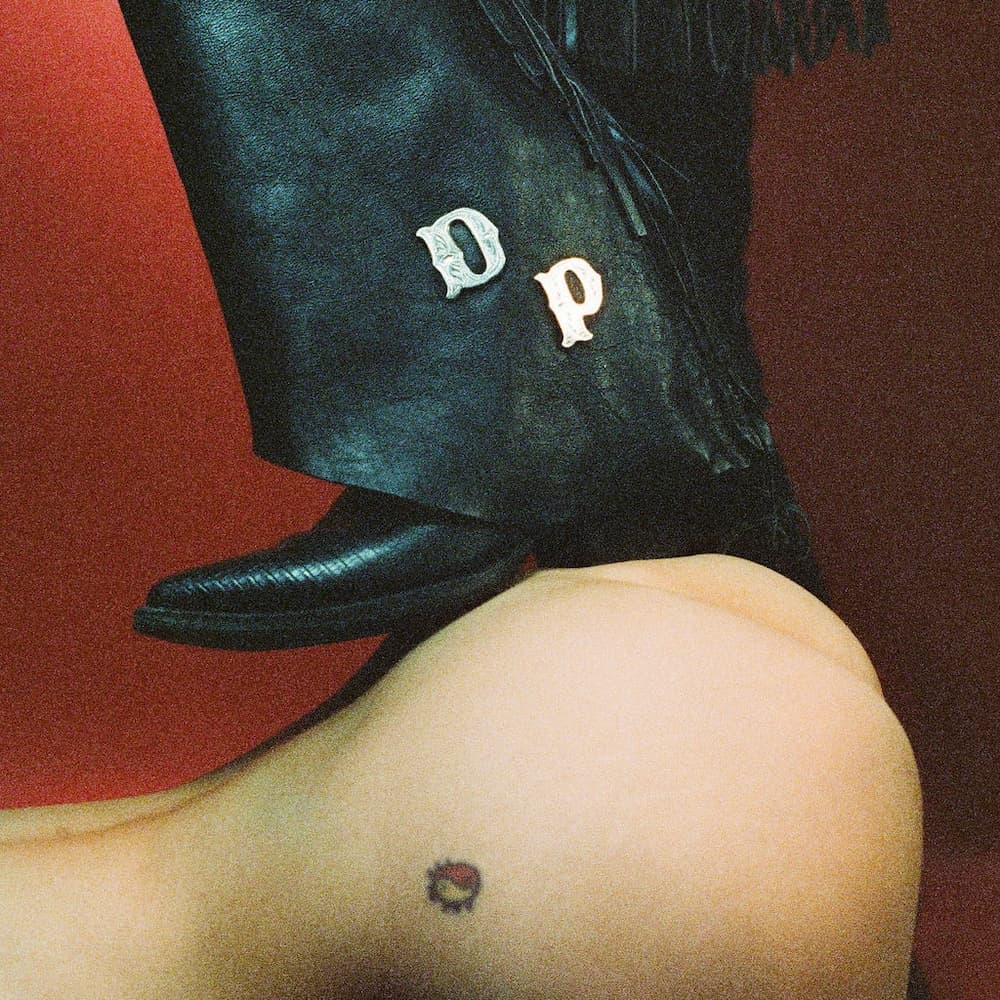
Pelled is entering 2026, the Year of the Fire Horse, in full leather chaps, rolling out her unapologetically blues-drenched album I Wish You Would featuring Sullivan Fortner on piano, Tony Scherr on bass, and Kenny Wollesen on drums. With this project, she sharpens the qualities that have always made her a singular act—expansive musicality, narrative bite, and a refusal to sand down the edges.This long-awaited album is Dida’s grand coming-out with her first love–the blues.
Dida Pelled is that rare artist who commands a room with her virtuosity, disarms it with a subtle laugh, creates a sense of belonging, and sends her audiences home wanting more. Everyone from the casual listener, the jazz-curious, the die-hard bebop heads, and beyond find something to love.